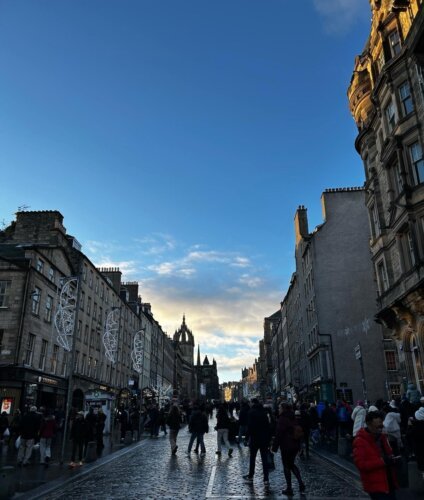
Stretching through the heart of Edinburgh’s Old Town, the Royal Mile is more than just a street; it is the historic spine of Scotland’s capital. Connecting two of the nation’s most significant royal residences—Edinburgh Castle at the summit and the Palace of Holyroodhouse at the base—this roughly one-mile stretch is a captivating blend of medieval architecture, atmospheric alleyways, and vibrant modern life. For any tourist or travel enthusiast, a walk along the Royal Mile is an essential pilgrimage, offering a concentrated dose of Scottish heritage in every cobblestone.
The “Mile” is actually composed of several distinct sections: Castlehill, the Lawnmarket, the High Street, the Canongate, and Abbey Strand. As you traverse these connected thoroughfares, the landscape shifts from the rugged, volcanic heights of Castle Rock to the refined elegance of the royal palace. Along the way, visitors are greeted by the sounds of bagpipes, the scent of traditional Scottish cuisine, and the sight of towering historic tenements that once made this one of the most densely populated places in the world.
History & Culture of Royal Mile
The history of the Royal Mile dates back nearly a millennium. In the 12th century, King David I established Edinburgh as a royal burgh, and the street began to take shape as a processional route between the fortification on the rock and the abbey at the bottom of the hill. During the Middle Ages, the city was confined within defensive walls, leading to the construction of “high-rise” tenements that reached up to fourteen stories—an architectural marvel of the time.
Culture in this part of Edinburgh is deeply rooted in the Scottish Enlightenment and the Reformation. The street has been home to philosophers like Adam Smith, writers like Robert Louis Stevenson, and religious firebrands like John Knox. Today, that culture is celebrated through numerous museums and the world-famous Edinburgh Festival Fringe, where the Royal Mile transforms into a massive open-air stage every August. The “closes”—narrow, steep alleyways branching off the main street—remain the most evocative remnants of the past, hiding secret gardens, ancient courtyards, and stories of the city’s dark and ghostly history.
What Royal Mile Is Famous For
The Royal Mile is globally famous for being the centerpiece of Edinburgh’s UNESCO World Heritage Old Town. It serves as the primary stage for the city’s most prestigious events, including the Royal Edinburgh Military Tattoo and the various summer festivals. Its unique layout, often described as a “fishbone” pattern with the main street as the spine and the narrow closes as the ribs, is one of the most well-preserved examples of medieval urban planning in Europe.
Architecturally, the street is renowned for St Giles’ Cathedral with its iconic crown spire and the strikingly modern Scottish Parliament building. It is also the legendary home of the “Real Mary King’s Close,” a series of underground streets that were built over and preserved for centuries, offering a haunting look at 17th-century life. For many, the Mile is also the best place to find authentic Scottish exports, from high-quality cashmere and tartan to rare single-malt whiskies available in specialist boutiques.
Things to Do in Royal Mile
Exploring the Royal Mile is a multi-sensory experience that can easily occupy a full day or more. One of the most popular activities is taking a guided ghost or history tour. These walks often lead you down into the hidden vaults or through the labyrinthine closes to hear tales of body snatchers, witches, and the city’s plague-ridden past. For those who prefer a self-guided approach, simply “getting lost” in the wynds and closes is a great way to discover hidden gems like Dunbar’s Close Garden, a recreated 17th-century oasis.
If you enjoy interactive experiences, the Scotch Whisky Experience near the top of the hill offers a virtual distillery tour and a chance to view the world’s largest collection of Scotch whisky. For a literal perspective shift, visit Camera Obscura and World of Illusions, where you can see live moving images of the city projected onto a table using Victorian technology, alongside five floors of mind-bending optical tricks. Shopping is also a major draw, with many visitors spending time selecting personalized tartans or browsing the unique bookshops and artisan craft stores that line the Canongate.
Places to Visit in Royal Mile
St Giles’ Cathedral
Located roughly halfway down the street, this magnificent Gothic structure has been the religious heart of Edinburgh for over 900 years. Inside, the Thistle Chapel is a highlight, featuring incredibly detailed woodcarvings and heraldic symbols of the Order of the Thistle, Scotland’s highest order of chivalry.
The Real Mary King’s Close
This is one of Edinburgh’s most fascinating historical sites. Visitors are led underground to walk on original 17th-century streets that were once open to the sky. Costumed guides bring the history of the families who lived and died here to life, providing a poignant and sometimes chilling glimpse into the past.
The Scottish Parliament Building
At the foot of the Mile, across from Holyroodhouse, lies this architectural marvel designed by Enric Miralles. Its abstract, modern design is a stark contrast to the surrounding ancient stone. Free tours are available, allowing visitors to see the debating chamber and learn about Scotland’s devolved government.
The Writers’ Museum
Tucked away in Lady Stair’s Close, this museum celebrates the lives and works of Robert Burns, Sir Walter Scott, and Robert Louis Stevenson. The building itself is a beautiful 17th-century house, and the surrounding courtyard, Makars’ Court, is inscribed with famous quotes from Scottish literature.
John Knox House
Dating back to 1470, this is one of the oldest and most picturesque buildings on the Royal Mile. It is associated with the Scottish Reformation and features unique wooden galleries and painted ceilings. It now serves as part of the Scottish Storytelling Centre.
Travel Guide to Royal Mile
Navigating the Royal Mile is straightforward, but knowing a few logistical details will help you avoid the crowds and make the most of your time in the Old Town.
Best time to visit Royal Mile
The Royal Mile is beautiful year-round, but your experience will vary wildly depending on the season. May and September offer the best balance of manageable crowds and decent weather. In August, the street is the epicenter of the Edinburgh Festival Fringe; it is incredibly vibrant but also extremely crowded, making it difficult to walk quickly from one end to the other. If you prefer a quiet, atmospheric experience, visit in the early morning (before 9:00 AM) or during the winter months, when the cobblestones glisten under the streetlights and the Christmas markets are in full swing.
How to reach Royal Mile
Since it is centrally located, reaching the Royal Mile is easy. Edinburgh Waverley train station is just a five-minute walk from the High Street section via North Bridge or the Cockburn Street “shortcut.” Most city buses and the Edinburgh Tram have stops on nearby Princes Street or George IV Bridge. If you are arriving from the airport, the Airlink 100 bus or the tram will bring you to the city center, from which the Mile is a short uphill walk.
Entry fees or ticket details
Walking the Royal Mile itself is free, as is entry to some sites like the Museum of Edinburgh and the People’s Story Museum. However, major attractions like Edinburgh Castle, the Palace of Holyroodhouse, and Mary King’s Close require paid tickets. It is strongly advised to book these in advance online, especially during peak season, as they frequently sell out.
Local food, cuisine, or specialties
The Royal Mile is the perfect place to sample traditional Scottish flavors. Look for “Haggis, Neeps, and Tatties” in the traditional pubs like The World’s End or Deacon Brodie’s Tavern. For something sweet, try a piece of Scottish tablet or shortbread from one of the many local bakeries. Many restaurants along the Mile also specialize in fresh Scottish seafood and game, such as venison or locally caught salmon.
Accommodation options
Luxury: The Witchery by the Castle provides an opulent, gothic stay right at the top of the hill. Mid-range: The Radisson Collection Hotel on the Royal Mile offers modern comfort with a prime location for sightseeing. Budget: There are several high-quality hostels, such as Castle Rock Hostel or High Street Hostel, located in historic buildings just off the main thoroughfare.
Safety, accessibility, and responsible tourism tips
The Royal Mile is generally very safe, but stay alert for pickpockets in heavy festival crowds. The street is made of historic cobblestones, which can be slippery when wet and difficult for those with limited mobility or in high heels. Sturdy walking shoes are a must. To be a responsible tourist, try to explore the smaller, independent shops in the Canongate section to support local businesses beyond the main souvenir hubs.
Travel Tips for Royal Mile
One of the best ways to experience the Mile is to walk from the top (the Castle) to the bottom (the Palace). This way, the walk is almost entirely downhill, saving your legs for the many stairs you might encounter in the closes.
Check the festival schedules before you arrive. If you are visiting in August, the Royal Mile is the place to see free street performers and “taster” shows, but you should allow double the usual time to walk the distance due to the sheer volume of people.
Don’t ignore the “lower” end of the Mile. While the Castlehill and High Street areas are the most famous, the Canongate section is often quieter and contains some of the most authentic historic architecture and peaceful hidden gardens in the city.
Finally, keep an eye out for the “Heart of Midlothian” mosaic in the pavement near St Giles’ Cathedral. It is a local tradition to spit on the heart for good luck, though tourists may prefer simply to acknowledge it as a mark of the city’s old prison site.
Is the Royal Mile actually a mile long?
The Royal Mile is actually a “Scots Mile,” which is slightly longer than a standard English mile, measuring approximately 1.81 kilometers or 1.1 miles from the Castle gate to the Palace entrance.
Can I walk the Royal Mile for free?
Yes, the street is a public thoroughfare and is completely free to walk. Many of the small museums and the Scottish Parliament are also free to enter, though main landmarks require tickets.
What are the “closes” on the Royal Mile?
Closes are narrow alleyways or passages that lead to courtyards or tenement buildings behind the main street. They were originally named after a prominent resident or the trade that took place within them.
What is the best place to buy a kilt on the Royal Mile?
There are many reputable tailors in the Lawnmarket and Canongate sections. Look for established shops that offer “made-to-measure” services to ensure you are getting an authentic, high-quality Scottish garment.
Are there public toilets on the Royal Mile?
Public toilets can be found in the Scottish Parliament building and near the St Giles’ Cathedral area. Most cafes and pubs also have facilities for customers, and major attractions have their own restrooms.
Is the Royal Mile suitable for children?
Absolutely. Children often love the street performers and attractions like Camera Obscura or the Museum of Childhood. However, be mindful that the cobblestones can be bumpy for strollers and prams.
When does the Royal Mile get most crowded?
The street is busiest during the month of August during the Edinburgh Festival Fringe. It also sees high foot traffic during the Christmas markets and the Hogmanay (New Year’s) celebrations.
Can you drive on the Royal Mile?
Parts of the Royal Mile are restricted to buses, taxis, and local access, especially during the summer. It is a pedestrian-heavy area, and driving is generally discouraged for tourists due to one-way systems.
Where can I hear bagpipes on the Royal Mile?
Bagpipers are a near-constant presence on the Royal Mile, usually stationed near the Castle Esplanade, outside St Giles’ Cathedral, or near the entrance to the Tron Kirk.
Is there a lot of uphill walking on the Royal Mile?
The street is built on a volcanic ridge. If you start at the Palace of Holyroodhouse and walk toward the Castle, it is an uphill climb. Starting at the Castle is much easier.
Leave a Review Cancel reply
I am a passionate freelance web designer committed to crafting visually appealing and highly functional websites. I believe a website is more than just an online presence—it’s a powerful tool for engaging audiences and driving business growth. Whether you’re a startup building your first website or an established brand seeking a refresh, I focus on clean design and seamless user experiences. If you’re looking for a partner to bring your digital vision to life, feel free to get in touch today.
Sorry, no records were found. Please adjust your search criteria and try again.
Sorry, unable to load the Maps API.
0 Reviews on “Royal Mile”
Walking the Royal Mile was the highlight of my Edinburgh trip. I started early in the morning at the Castle and slowly made my way down to the Palace. The sheer amount of history tucked away in the narrow closes is staggering; every time I turned a corner, I felt like I had stepped back into the 1600s. I highly recommend taking a moment to sit in Dunbar’s Close Garden—it’s a silent escape from the tourist bustle just a few yards away. The blend of bagpipes in the air and the stunning Gothic architecture makes it a place like no other. Make sure you wear good shoes, as those cobblestones are historic but definitely uneven! It’s an absolute must-see for anyone visiting Scotland.